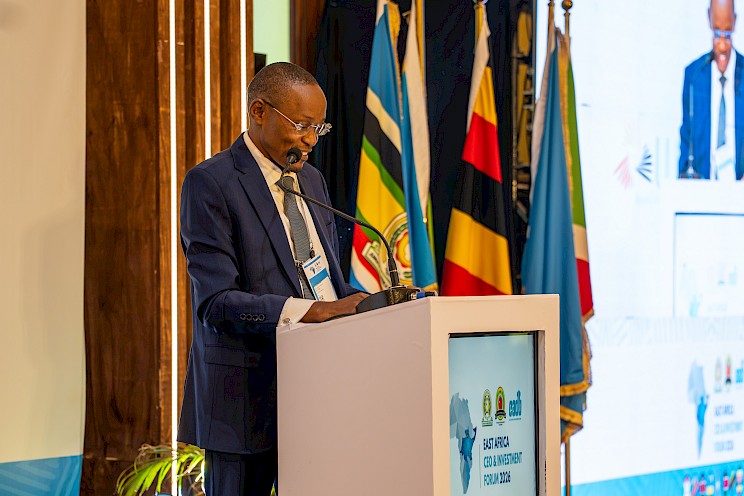
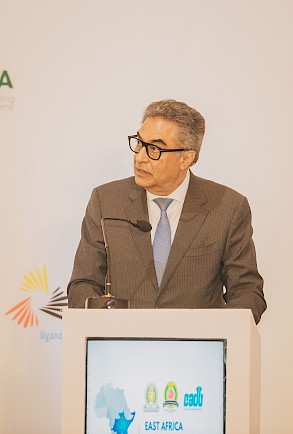
Opening the inaugural East Africa CEO & Investment Forum that took place from 17-18 September 2026, EADB Acting Director General Benard Mono said the two-day gathering should move beyond aspiration and deliver tangible commitments, partnerships and investment deals.
Co-convened by EADB and the East African Business Council, the forum brought together policymakers, senior government officials, business leaders, financial institutions and development partners, including a delegation of more than 50 investors from the European Union.
Mr Mono described East Africa as Africa’s fastest-growing economic bloc, with a market of more than 300 million people, one of the world’s youngest populations, a rapidly expanding middle class and strategic links to continental and global markets.
He cautioned, however, that growth alone would not deliver transformation. Infrastructure, value-adding industries, innovation and patient capital are needed to turn investment opportunities into productive enterprises and competitive regional trade.
“Without adequate and patient capital, investment opportunities remain just opportunities,” Mono said, positioning EADB as a regional partner capable of financing projects from large-scale developments to grassroots enterprises.
In recent years, EADB has disbursed over USD 300 million into projects across the East African region covering different sectors including tourism, manufacturing, agriculture, and service sectors which have generated thousands of jobs and enabled both large as well as small and medium enterprises to contribute meaningfully to the region's development.
Addressing international investors and development finance partners, Mono said EADB was ready to co-finance and scale high-impact projects. He cited the bank’s regional experience, liquidity, funding pipeline and institutional capacity as foundations for collaboration.
CEO roundtables held across East Africa ahead of the forum identified common priorities: a more competitive and predictable business environment, regulatory certainty, deeper regional market integration, industrialisation, value addition, job creation and economic diversification.
Mr Mono said the region’s task was not simply to attract capital, but to build an integrated investment ecosystem in which policy, enterprise and finance reinforce one another.
He said the forum would ultimately be judged by the partnerships formed, deals concluded, projects financed, jobs created and measurable improvements in the lives of East Africans.
EADB pledged to use prudent and flexible financing to help translate the forum’s discussions into real investment and development outcomes across the region.
Speaking during the official opening, the Chief Guest, Hon. Beatrice Askul Moe, Cabinet Secretary, Ministry of East African Community, ASALs and Regional Development, Republic of Kenya, emphasised the importance of translating regional integration commitments into predictable and competitive conditions for businesses and investors.
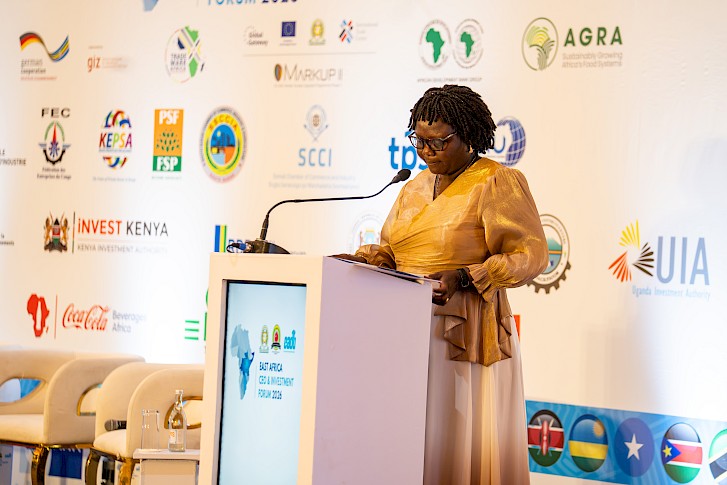
She highlighted the opportunities presented by the EAC Common Market and AfCFTA, while underscoring the need to address implementation challenges affecting businesses, including non-tariff barriers, tax-related constraints and delays in implementing agreed regional measures.
In his speech, H.E. Amb. Stephen P. Mbundi, EAC Secretary General, said the EAC has recorded strong macroeconomic growth, averaging 5.3% over the past decade, but the region must now translate this growth into greater trade, investment and industrialisation. He noted that the EAC aims to increase intra-EAC trade from 22.8% to at least 50% over the next five years, requiring stronger implementation of regional integration commitments and a more predictable business environment.
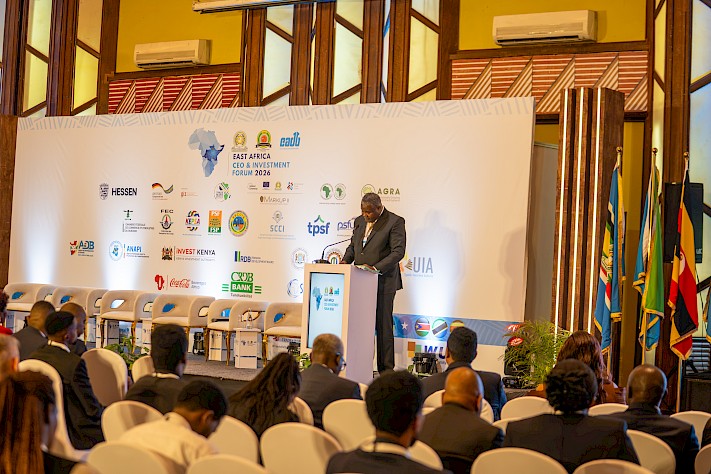
“We must move decisively from volumes to value. Manufactured goods account for less than 30% of EAC exports, while raw agricultural commodities continue to dominate our export basket. We need stronger regional value chains that enable Partner States to source, process and manufacture across borders, keeping more value within East Africa.”
In his remarks, Mr. Ahmed Farah, Executive Director of the East African Business Council (EABC), said the real measure of regional integration is whether businesses can operate across borders more efficiently, predictably and at lower cost.
“The purpose of this Forum is to turn regional integration into engines of business growth and investment. East Africa has a large and growing market, but that market only matters if businesses can actually use it.”
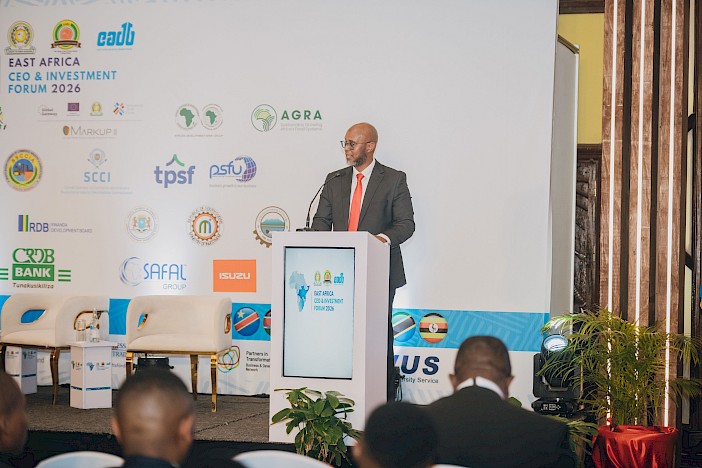
Mr. Farah said EABC is working towards a borderless East Africa for trade and investment, with greater emphasis on evidence-led advocacy, regional value-chain development, trade facilitation and investment mobilisation.
He elaborated that East Africa Trade and Investment Climate Report 2026 provides a baseline for measuring progress in improving the regional business environment and serves as our scorecard.
In his speech, Hon. Manfred Pentz, Hessen State Minister for Federal, European and International Affairs and Bureaucracy Reduction, said the partnership between East Africa and Hessen presents opportunities to combine East Africa’s markets, talent and growth with Germany’s industrial expertise, research and capital.
“East Africa brings scale, talent, technology and strong growth, while Hessen brings industrial excellence, research, capital and access to the European market. This is a powerful combination. Together, we can turn innovation made in Africa and technology made in Germany into new opportunities for trade, investment and jobs.”
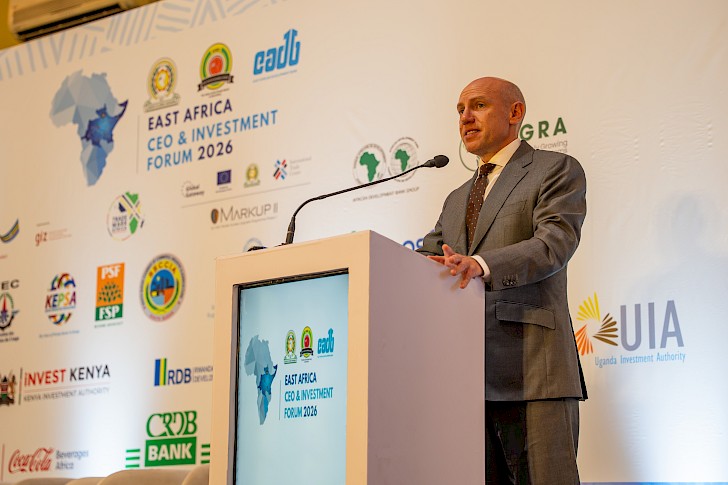
He added: “We want to reduce barriers between East Africa and Europe and bring our economies closer together. Economic cooperation becomes stronger when businesses can connect, invest, innovate and trade more easily.”
Mr. Jas Bedi, EABC Vice Chairperson, emphasised that East Africa should increasingly be viewed as one investment ecosystem rather than a collection of competing national markets.
He called for Partner States to leverage their respective comparative strengths to develop regional value chains and complementary production networks.
He also highlighted the importance of greater predictability in the regional trade framework, including the need for clarity around the Common External Tariff and stays of application, which can affect investment planning and regional sourcing decisions.
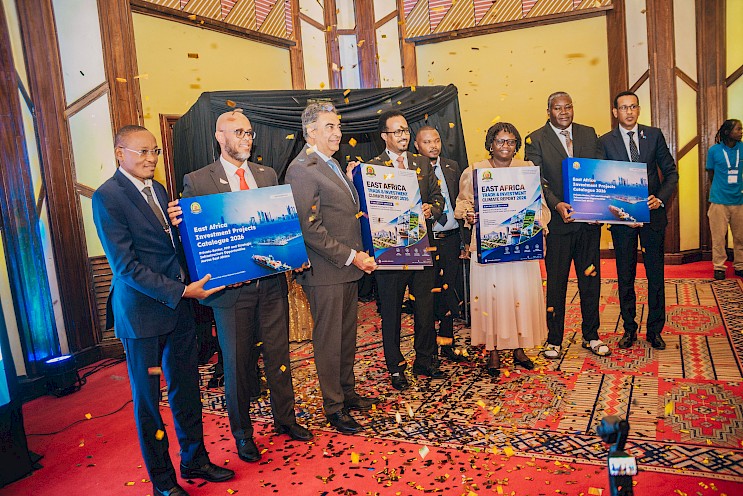
The EAC Trade and Investment Climate Report 2026 and the East Africa Investment Projects Catalogue were officially launched during the Forum, providing an evidence base for regional reforms and a pipeline of investment opportunities.